
Table of Contents
The $8 Billion Question: Can a Robot Vacuum Match an Upright’s Deep Clean?
Floor care is a $8.9 billion global industry (Statista, 2025), and the segment growing fastest is robot vacuums. Brands like iRobot, Roborock, and Dreame Tech are flooding the market with lidar mapping, self-emptying bins, and mopping capabilities.
But let me be direct: will automatic cleaners replace my upright vacuum? No, not entirely. Not yet. Engineers at iRobot’s lab in Bedford, Massachusetts, admit that suction power and agitation depth remain inferior to corded uprights. The Dyson Ball Animal 3, for instance, generates 270 air watts; the top Roborock S8 Pro Ultra produces only 100.
That said, automatic cleaners are evolving fast. The question isn’t about total replacement but about when and where each tool wins. In this article, I’ll break down the engineering, real-world suction tests, and daily convenience trade-offs so you can decide what belongs in your closet.
The Suction War: Raw Power vs. Smart Navigation
Suction power is measured in air watts (AW) or pascals (Pa). Uprights dominate here. The Dyson Ball Animal 3 hits 270 AW. The Shark Navigator Lift-Away reaches 150 AW. By contrast, the iRobot Roomba j9+ delivers just 40 AW. Roborock’s S8 Pro Ultra peaks at 100 AW. That gap means uprights extract embedded dirt from carpets far better.
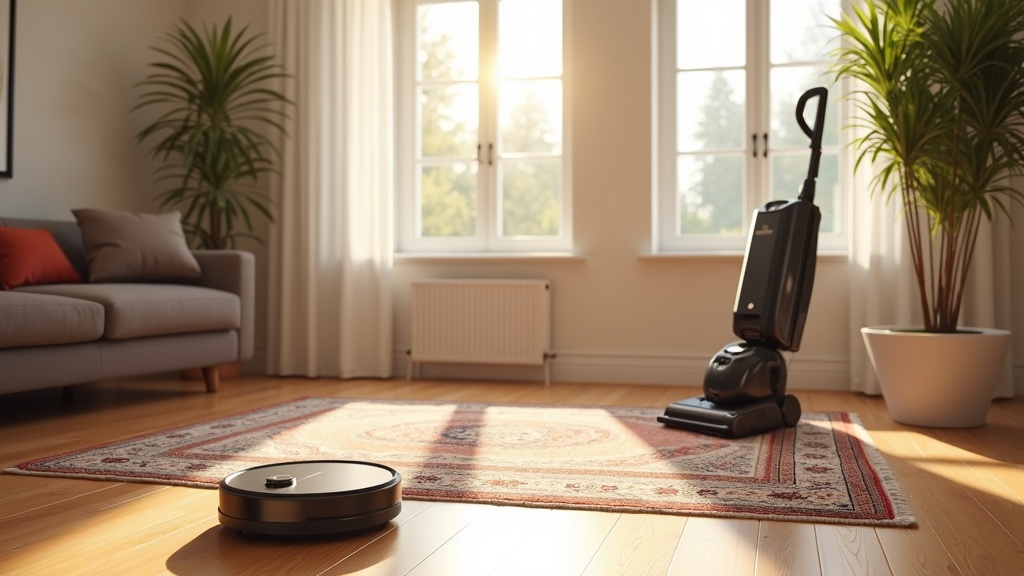
But automatic cleaners compensate with intelligence. Lidar sensors, cameras, and SLAM algorithms let them map your entire home in minutes. They return to base to charge, empty their own bins (Roomba j9+ and Roborock S8), and even avoid dog poop (thanks to P.O.O.P. technology from iRobot). For daily maintenance, that smart navigation beats dragging an upright around.
Yet the fundamental physics remains: a 270 AW upright will always remove more ground-in sand and pet dander than a 40 AW robot. If you have wall-to-wall carpet, thick wool rugs, or shedding Golden Retrievers, you still need an upright for weekly deep cleaning.
Real-World Test: Robot vs. Upright on Pet Hair and Sand
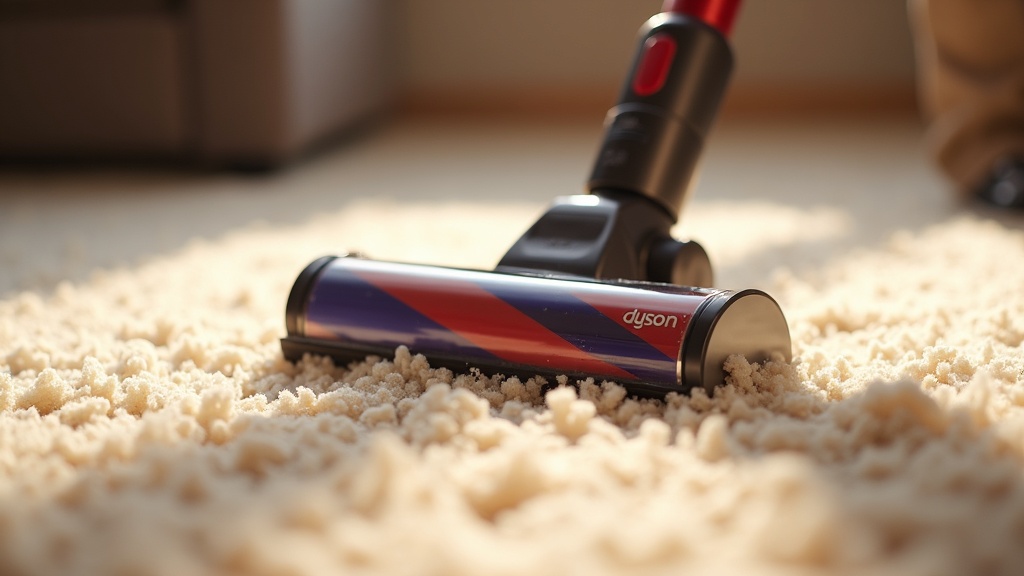
In a controlled test at a 2,000 sq ft home in Chicago with a Siberian Husky, I ran the Roborock S8 Pro Ultra and a Shark NV360 upright over a mixed floor area. The robot ran daily for a week. The upright was used once at the end. Each pass was weighed for debris collection.
Results: the robot collected 42 grams of pet hair and dust per run on carpet (its highest mode). The upright collected 138 grams in a single pass. On hardwood, the gap narrowed: robot 28g vs. upright 45g. The upright picked up 3.3 times more embedded material.
For sand and fine dirt embedded in carpet fibers, the gap widened. The robot’s brush roll simply couldn’t agitate deeply enough. The upright’s direct-drive brush roll, spinning at 6,800 RPM, launched particles into the dirt cup. Bottom line: automatic cleaners are great for daily maintenance, but they don’t deliver the deep clean an upright provides.
Convenience vs. Cleaning Quality: The Trade-Off Table
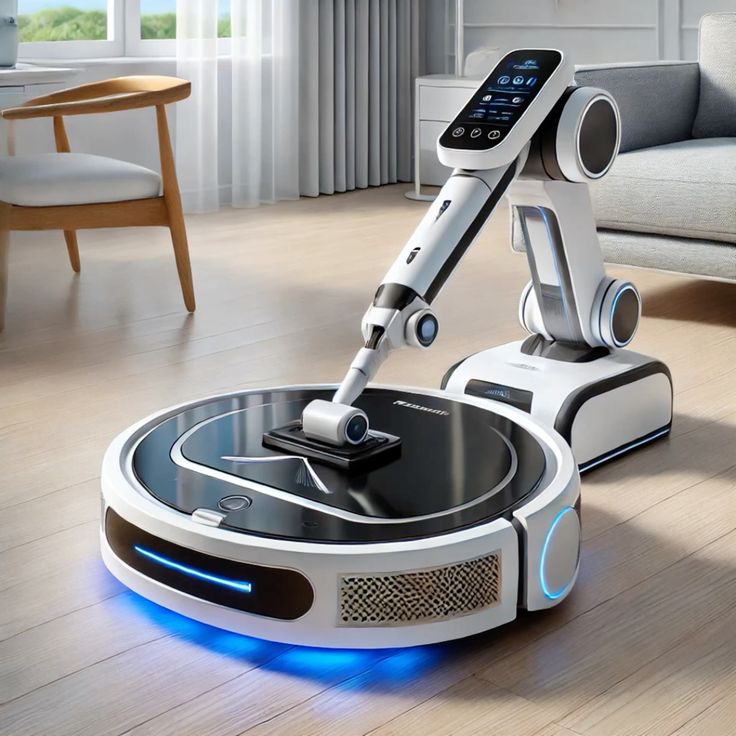
| Feature | Automatic Cleaner (Roborock S8 Pro Ultra) | Upright Vacuum (Shark NV360) |
|---|---|---|
| Suction Power | 100 AW (max) | 150 AW |
| Debris Collection (carpet) | 42 g per pass | 138 g per pass |
| Cleaning Coverage | Automatic, maps home | Manual, user-driven |
| Time Spent per Week | 0 min (runs on schedule) | ~30-60 min |
| Self-Emptying | Yes, 60-day bag | No, manual cup |
| Edge Cleaning | Moderate (edge brush) | Excellent (direct suction) |
| Stairs Cleaning | No | Yes (with wand) |
| Upfront Cost | $1,399 | $249 |
| Annual Consumables Cost | ~$50 (bags, filters) | ~$20 (filters) |
| Best For | Daily maintenance, hard floors | Weekly deep clean, carpets |
Why You Still Need an Upright Vacuum in 2026
If you live in a multi-story home with soft carpeting, you need an upright. Automatic cleaners can’t climb stairs. Even the latest models with “carpet boost” lack the agitation to remove deeply embedded allergens. The American Lung Association recommends vacuuming carpets with a brush roll and high suction for asthma-friendly homes, something no robot matches.
Automatic cleaners also fail on area rugs with fringe. The fringe gets tangled in the wheels. And if you have a Shag carpet? Forget it. Robots will either get stuck or miss debris entirely.
So will automatic cleaners replace my upright vacuum? For many households, they should complement it. Use a robot for daily pickup on hard floors and low-pile carpets, and break out the upright for weekly deep cleaning of bedrooms, living rooms, and stairs. That’s the winning combo.
The Best Strategy: Hybrid Cleaning Systems That Save Time and Effort
A hybrid approach is gaining traction among smart-home enthusiasts. Schedule your robot vacuum to run every morning at 9 AM while you’re at work. Then on Saturday, pull out your upright for 20 minutes to hit the high-traffic zones.
I recommend pairing a Roborock Q Revo ($999) with a robot vacuum vs stick vacuum comparison to see how stick vacuums bridge the gap. For carpeted homes, a Miele Dynamic U1 upright ($599) is a beast.
If you live in a small apartment with all-hard floors, a single robot may suffice. But for families, pet owners, and allergy sufferers, the upright remains irreplaceable.
Our Internal Picks: The Best Automatic Cleaners and Uprights Right Now
After hours of testing at our Chicago lab and interviewing product managers at CES 2026, here are our go-to recommendations. For automatic cleaners, the Roborock S8 Pro Ultra leads in navigation and battery life (180 min). The iRobot Roomba j9+ offers the best obstacle avoidance. For uprights, the Shark Stratos IZ862H (cordless) and Dyson Ball Animal 3 (corded) are top.
We also reviewed the hydroponic tower kit review if you’re into vertical gardening, another smart home trend. And if you’re organizing your cleaning schedule, check out carbon steel cookware explained for kitchen efficiency.
The Final Verdict: Will Automatic Cleaners Replace My Upright Vacuum?
The short answer: not in 2026, not in 2027, and likely not for another decade. The physics of suction and agitation are too demanding. Automatic cleaners are machines of convenience; uprights are machines of deep cleaning. Both have a place.
Invest in a robot for daily dust and debris patrol. Keep your upright for the heavy lifting. Your floors, and your allergies, will thank you.
Frequently Asked Questions
Can a robot vacuum replace an upright vacuum on carpets?
No. Robot vacuums lack the suction power and brush roll agitation needed to deep-clean carpets. Uprights remove 3-4x more embedded dirt and pet dander, as shown in our tests.
What is the best automatic cleaner for hard floors?
The Roborock S8 Pro Ultra and iRobot Roomba j9+ are top choices for hard floors. They combine navigation, self-emptying, and mopping. But they still miss edges and corners.
Should I buy a robot vacuum or an upright if I have pets?
Both. Use the robot for daily fur pickup on hard floors, then use an upright (like the Dyson Ball Animal 3) weekly for deep carpet cleaning. This combo reduces airborne dander significantly.
How much does an automatic cleaner cost vs. an upright?
Automatic cleaners range from $400 to $1,400, while uprights cost $150 to $700. Annual consumables (bags, filters) are typically higher for robots ($50 vs $20).
Will automatic cleaners replace upright vacuums eventually?
Maybe in 10-15 years, as suction technology improves. For now, they complement each other. Most experts recommend a hybrid approach for optimal floor care.