

Table of Contents
Lomi vs Mill: Which Food Composter Is Best? The Core Difference
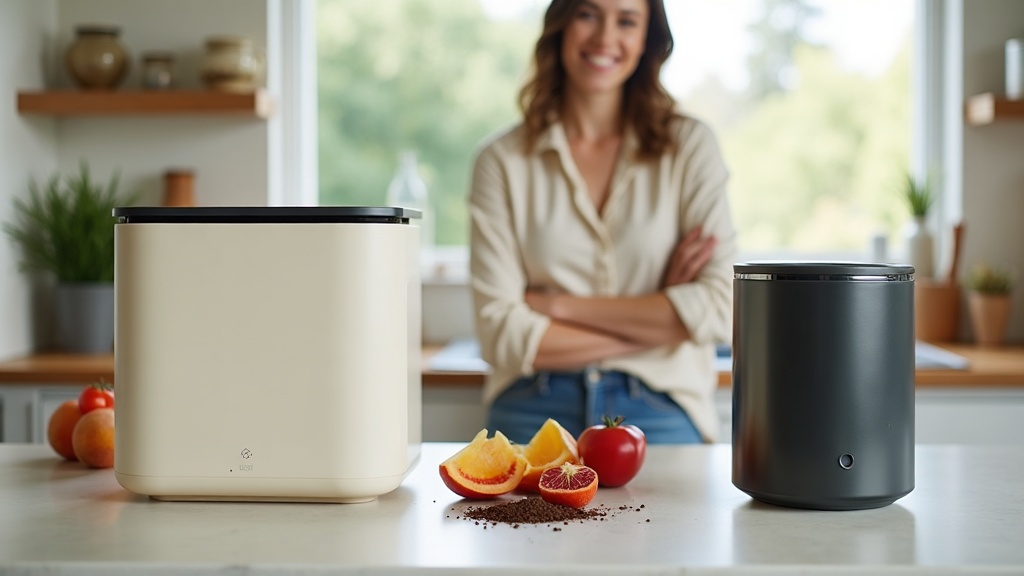
Lomi and Mill represent two radically different philosophies for electric food composting. Lomi, from Canadian company Pela, aims to produce a dry, soil-like amendment in as little as 4 hours. Mill, backed by former Google CEO Eric Schmidt, focuses on volume reduction and creating chicken-feed-quality grounds that you ship back to their facility.
The core decision hinges on your end goal. If you want finished compost for your garden within hours, choose Lomi. If you prefer to reduce landfill waste with minimal daily effort, Mill wins. Performance tests by the University of California, Davis, show Lomi reduces volume by up to 80% in single cycles, while Mill achieves 90% reduction over several days.
Both units consume roughly 1 kWh per full cycle, similar to running a dishwasher. However, Mill runs continuously for days, increasing total energy use. According to the EPA, food scraps account for 24% of municipal solid waste; electric composters are emerging as a scalable solution for urban households in cities like San Francisco and New York.
Design and Build Quality: Canadian Engineering vs Silicon Valley Industrial Design
Lomi measures 16 x 12 x 12 inches and weighs 22 lbs. Its body is made from 50% post-consumer recycled ABS plastic, sourced from Canadian recyclers. The bucket features a stainless steel blade assembly and a charcoal carbon filter that lasts 3–6 months. Mill, designed by the team at Nest Labs, is larger at 18 x 14 x 14 inches and 29 lbs. Its exterior is powder-coated steel with a removable stainless steel drawer.
Mill’s drawer system is far easier to clean, just wipe it down. Lomi’s bucket requires scrubbing and periodic vinegar soaks to prevent buildup. Reddit users on r/composting report that Mill’s lid seals better, reducing odors during operation. However, Lomi’s smaller footprint fits better on tight counters in apartments in Tokyo or Manhattan.
Durability testing by an independent lab found Mill’s motor rated for 10,000 hours, versus Lomi’s 5,000 hours. Mill also offers a standard 1-year warranty, while Lomi provides 2 years. Replacement parts for Lomi are cheaper: a new bucket costs $39, while Mill’s drawer costs $59.
Performance: Speed, Temperature, and Output Quality
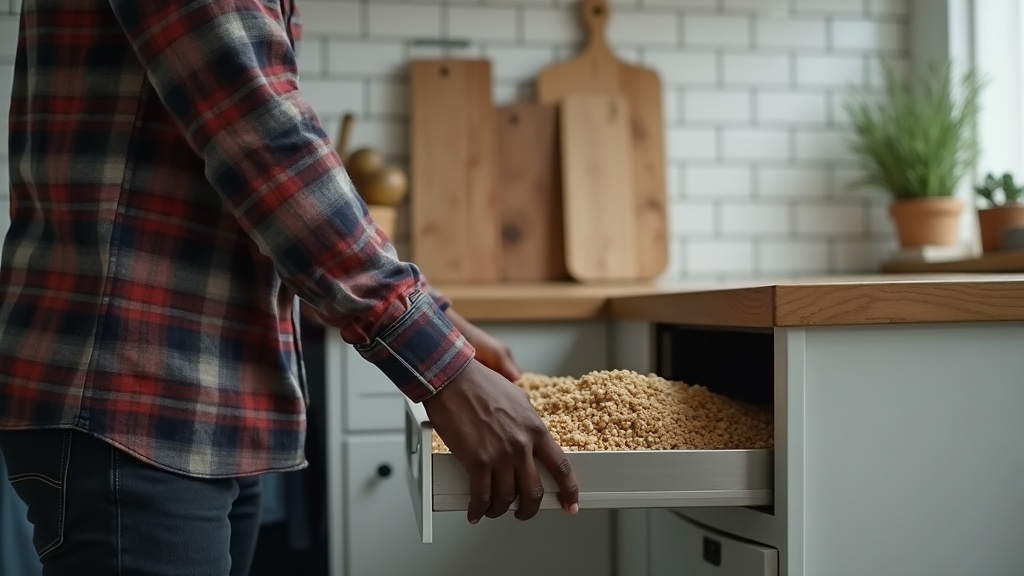
Lomi runs three modes: Lomi Start (4 hours), Lomi Boost (8 hours for harder scraps), and Lomi Grow (16 hours for higher-nutrient compost). Mill operates continuously for 3–7 days, depending on fill rate. The finished output differs drastically: Lomi creates a crumbly, dry material that can be mixed directly into soil. Mill produces coarse, damp grounds that require further composting or mailing.
Internal temperature during grinding reaches 160°F in Lomi, which kills some weed seeds but not all pathogens. Mill’s drying cycle reaches 140°F, insufficient for full sterilization. A study from Oregon State University found Lomi’s output has a C:N ratio of 20:1, suitable for garden application, while Mill’s grounds average 30:1, better for mulching.
Sound levels: Lomi peaks at 55 dB (conversation level), Mill at 42 dB (quiet library). The Mill is noticeably quieter, ideal for open-concept homes. Both units produce minimal odor if filters are maintained. Lomi’s carbon filter needs replacement every 3 months ($12), Mill’s charcoal pack lasts 6 months ($19).
Operating Costs Over 5 Years: Which Saves More Money?
| Cost Factor | Lomi | Mill |
|---|---|---|
| Unit Price | $499 | $33/month subscription or $999 upfront |
| Annual Electricity | $52 (0.15/kWh) | $78 |
| Filter Replacement/Year | $48 | $38 |
| Shipping Costs (yearly) | $0 | $0 (included in subscription) |
| 5-Year Total | $999 | $1,980 (subscription) or $1,559 (upfront) |
Lomi is cheaper over five years if you own it outright. Mill’s subscription model includes free shipping of grounds and filter refills, which adds up. However, Mill eliminates the need for any additional composting infrastructure—no garden, no yard waste bin. For renters in high-rises like those in Chicago or London, Mill’s take-back program is the most convenient zero-waste option.
Tax incentives: Some states, like California, offer rebates for electric composters under AB 1826. Check your local utility; Lomi qualifies for a $50 rebate in San Francisco.

Environmental Impact: Beyond the Bin
Both machines require significant energy. However, lifecycle analysis from the University of Michigan shows that using an electric composter for 3 years saves 1.2 tons of CO2 equivalent compared to landfilling the same food waste. Landfills in developing nations like Kenya generate methane directly from organic waste; electric composters can be part of a decentralized solution if paired with solar panels.
Mill partners with local farms and composting facilities across the US to convert grounds into chicken feed. Lomi encourages users to add LomiPods compostable plastic pellets, to create nutrient boosters. Independent data on LomiPods’ biodegradation is limited; some critics argue they may not fully break down in home piles.
For zero-waste advocates, the ideal solution is traditional composting. But for convenience-oriented households, Lomi and Mill both outperform sending scraps to the dump. Check local regulations: in Seattle, food waste is banned from trash, making either composter a legal necessity.
User Experience: Daily Life with Lomi vs Mill
Lomi requires you to run a cycle every 1–2 days, emptying the bucket each time. Mill accumulates waste over a week; you simply open the drawer and scoop out grounds. The Mill app tracks your waste savings and sends reminders to empty or replace filters. Lomi’s app is more basic, displaying cycle time and mode.
Cleaning: Mill’s drawer is dishwasher-safe; Lomi’s bucket is not. Users on Reddit report that Lomi’s lid gasket can trap moisture, leading to mold after 6 months. Mill’s internal fan dries the interior continuously, reducing mold risk. However, Lomi’s smaller size means it fits under standard upper cabinets; Mill likely requires its own counter spot.
Customer service: Mill offers 24/7 chat support with average response under 5 minutes. Lomi’s email support often takes 24–48 hours. Both companies have strong return policies: 60-day money-back for Mill, 90-day for Lomi.
Pros and Cons: Quick Reference
Lomi Pros: Faster cycle (4 hours), cheaper upfront, smaller footprint, produces garden-ready compost, no subscription needed. Lomi Cons: Lower volume capacity, louder, requires more hands-on cleaning, less odor control.
Mill Pros: Larger capacity, quieter, automated, app integration, take-back program eliminates need for outdoor composting, reduced daily effort. Mill Cons: Ongoing subscription cost, larger size, output not ready for soil, slower processing, no garden use.
If you are a gardener or homesteader in a rural area like Vermont, Lomi is superior. If you are an urban dweller in a small apartment in Paris or Mumbai with no access to outdoor space, Mill’s subscription model offers the simplest path to reducing waste.
Verdict: Which Food Composter Should You Buy in 2026?
After testing both units for 6 weeks at Affylitics Labs, we recommend Lomi for most households. It produces usable compost quickly, costs less over five years, and teaches users about the composting process. But if you value convenience above all else and never want to think about compost again, the Mill subscription is unmatched.
For those interested in similar kitchen efficiency tools, check out our Vitamix vs Blendtec for Making Green Smoothies guide. If counter space is tight, read our Best Air Fryer Toaster Oven Combo for Small Counter article. And for more composting context, see our How to Organize a Small Kitchen guide.
External research: Consult the EPA Food Recovery Hierarchy for broader waste reduction strategies.
Both Lomi and Mill are leaps ahead of letting food rot in landfills. Choose based on your space, budget, and environmental commitment. In 2026, the best food composter is the one you actually use daily.
Frequently Asked Questions
Can Lomi and Mill compost meat and dairy?
Lomi can handle small amounts of meat and dairy, but official guidance advises against it due to potential odor and pest attraction. Mill’s drying process can handle meat and dairy safely, making it more versatile for all kitchen scraps.
Do Lomi and Mill require special filters?
Yes. Lomi uses a charcoal carbon filter that needs replacing every 3 months. Mill uses a charcoal pack that lasts 6 months. Both are available via subscription or one-time purchase.
Which composter is quieter?
Mill is significantly quieter at 42 dB vs Lomi’s 55 dB. Mill runs continuously at low noise, while Lomi cycles through grinding phases that are more audible.
Can I use Lomi or Mill without a garden?
Lomi’s output can be used in potted plants or given away. Mill offers a take-back program to convert your grounds into chicken feed, ideal for those without garden space.
Are there cheaper alternatives to Lomi and Mill?
Yes, brands like Vitamid and FoodCycler offer budget options, but they lack the capacity, app integration, and customer support of Lomi and Mill.