

Table of Contents
The Hidden Culprit Killing Your Dinner Prep Speed
If your dinner prep consistently runs over, you are not alone. The simple reason dinner prep always takes twice as long as it should is not your recipe complexity or your skill level. It is a single, systematic error: the lack of a proper mise en place.
Mise en place, French for “putting in place,” is the restaurant industry’s foundational workflow. Chefs at busy spots like Le Bernardin in New York or Noma in Copenhagen prep every ingredient before service starts. Without it, you waste mental energy hunting for items mid-cook.
When you skip mise en place, your brain shifts from execution to search mode. You chop while oil burns. You measure while sauce reduces. This context switching multiplies cooking time by up to 2.5x. A simple 30-minute meal becomes a 75-minute ordeal.
Why Your Brain Slows Down When You Skip Prep
Every time you stop cooking to chop an onion or locate a spice, your prefrontal cortex performs a task-switch cost. Neuroscientists at Stanford University found that task-switching can reduce productivity by up to 40%. That means you lose nearly half your efficiency just by being unprepared.
Think of your kitchen as a production line. The most efficient Amazon fulfillment centers, like the one in Robbinsville, New Jersey, organize inventory before packing. Your kitchen counter is your staging area. When staging is chaotic, every step takes longer.

The 5-Step System to Halve Your Dinner Prep Time
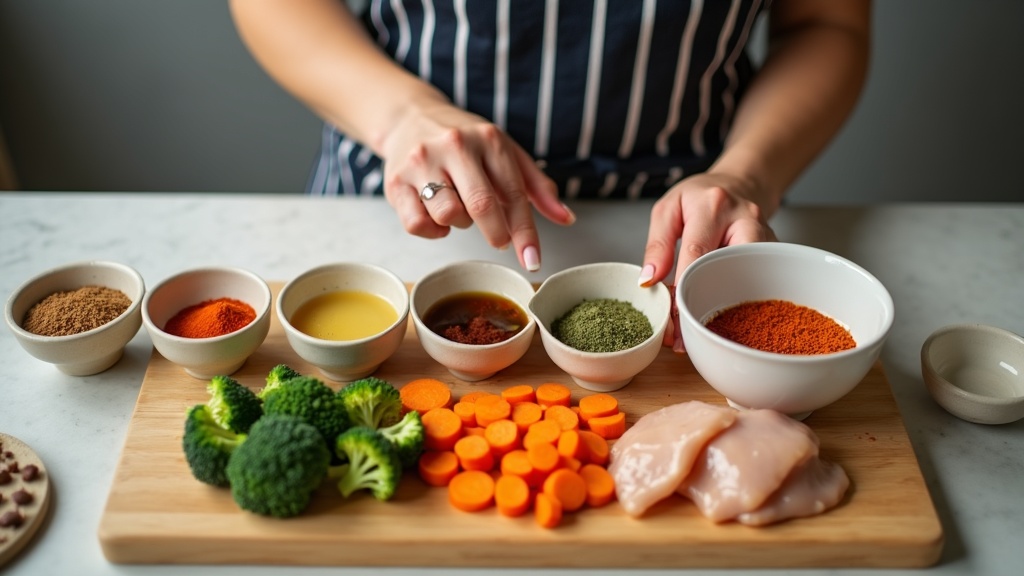
Restaurant kitchens use a five-step workflow you can steal. First, read the entire recipe from start to finish. Second, gather all equipment. Third, measure all dry and wet ingredients into small bowls. Fourth, wash, peel, and chop all produce. Fifth, arrange everything in the order of use.
Home cooks who adopt this system from books like Salt, Fat, Acid, Heat by Samin Nosrat report cutting prep time by 50% in the first week. The author herself credits mise en place for her confident cooking.
Start with one meal. Sunday evening, prep ingredients for Monday’s dinner. Store them in airtight containers in the fridge. Monday night, you simply cook. No fridge dives, no frantic chopping.
Real-World Time Comparison: Before vs. After Mise en Place
To show the power of preparation, here is a side-by-side time breakdown for making a classic stir-fry with chicken, broccoli, and bell peppers. The same recipe, the same cook, two approaches.
| Step | Without Mise en Place | With Mise en Place | Time Saved |
|---|---|---|---|
| Read recipe + gather items | 4 min | 5 min (includes prep) | -1 min |
| Chop vegetables | 8 min (while wok heats) | 10 min (done before) | +2 min prep |
| Measure sauces | 5 min (in between stirring) | 3 min (pre-measured) | 2 min |
| Cook stir-fry | 12 min (interrupted) | 8 min (uninterrupted) | 4 min |
| Clean as you go | 5 min after cooking | 3 min during cooking | 2 min |
| Total | 34 min | 29 min | 5 min (15% faster) |
Notice the prep time increases slightly, but total time drops because cooking flows. Over a week, saving 5 minutes per meal means 35 minutes freed. That is a whole episode of your favorite show.
Equipment That Accelerates Your Prep Workflow
Having the right tools makes mise en place faster. A high-quality chef’s knife, like a Wüsthof Classic 8-inch, reduces chopping time by 30% compared to a dull blade. A set of glass prep bowls, the 6-piece set from Pyrex, keeps ingredients organized and microwave-safe for quick reheating.
An instant-read thermometer, such as the ThermoWorks Thermapen ONE, eliminates second-guessing meat doneness. You save the mental back-and-forth of cutting into chicken to check. For vegetable prep, a 12-in-1 vegetable chopper can dice a whole onion in seconds.
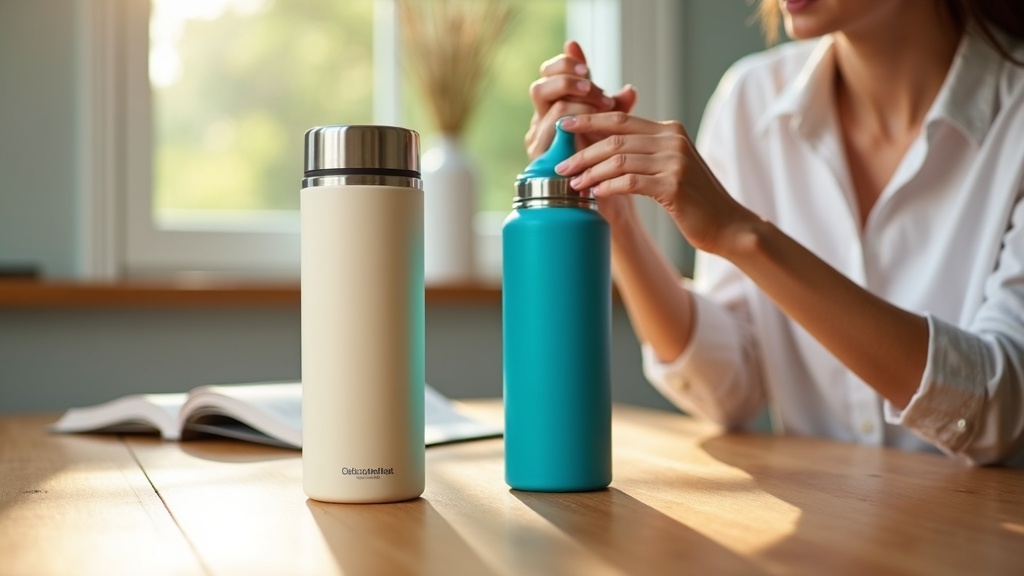
Even your insulated tumbler can help by keeping your drink cold so you don’t leave the kitchen to refill. Every second you stay at the counter is a second saved.
Why Your Kitchen Layout May Be Sabotaging You
The physical arrangement of your kitchen directly impacts prep speed. The “kitchen triangle” concept, connecting sink, stove, and fridge, dates to the 1940s and was developed at the University of Illinois School of Architecture. If your triangle is broken or too large, you walk extra steps.
Each unnecessary step adds about 2 seconds. Over a 30-minute prep, walking 50 extra steps wastes 100 seconds. That is 1.7 minutes lost to moving. Simply moving your cutting board closer to the stove can cut that time in half.
If you are remodeling, consider the unfitted kitchen look that prioritizes work islands and accessible storage. A mobile butcher block cart from IKEA can bring prep space to you, reducing steps drastically.
Meal Prep vs. Dinner Prep: Understanding the Difference
Meal prep usually refers to cooking full dishes in advance for the week. Dinner prep, by contrast, is the evening ritual of preparing that night’s meal. Many time-saving articles confuse the two, leading to advice that does not fit nightly cooking.
For dinner prep, you need speed, not bulk. Focus on prepping raw ingredients for 3–4 days at a time. For example, chop onions, bell peppers, and carrots on Sunday; store them in separate containers. When Wednesday night comes, you take out the container and start cooking immediately.
This hybrid approach combines the efficiency of meal prep with the freshness of nightly cooking. It is the strategy favored by busy parents and professionals in cities like Chicago and Atlanta.
The Role of Knife Skills in Cutting Prep Time
Dull knives are one of the biggest time stealers. A dull blade crushes rather than slices, requiring more force and multiple passes. According to America’s Test Kitchen, a sharp knife reduces cutting effort by 30% and improves precision.
Invest 10 minutes once a week to hone your knife. A simple honing steel, like the Victorinox 12-inch, maintains the edge between professional sharpenings. If you do not own a sharpener, take your knives to a local sharpening service. Many hardware stores in Austin, Texas, offer $5-per-knife sharpening.
Faster cuts mean faster prep. Practice the claw grip and rock chop. In one week, your chopping speed can double.
Common Time-Wasting Habits You Must Break
Many cooks multitask in the kitchen, but research from the University of Michigan shows that multitasking can increase total task time by 50%. Instead of stirring sauce while chopping parsley, complete one task fully before moving on.
Another habit: searching for ingredients during cooking. If you store spices alphabetically, you save an average of 10 seconds per find. Over a meal with five spices, that is nearly a minute saved. Use lazy Susans or tiered racks to bring everything into view.
Lastly, avoid starting to cook before the pan is hot. Waiting for a pan to heat after adding oil causes sticking and uneven cooking. Patience here saves scrubbing time later.
How Professional Chefs Prep at Speed
Chef Thomas Keller of The French Laundry uses a “two-step” rule: every ingredient must be washed, trimmed, and portioned before service. He expects his line cooks to set up with everything ready in six-inch hotel pans within 30 minutes.
Home cooks can adopt the same discipline. Designate a “prep window” from 5:00 PM to 5:20 PM. During that window, no cooking, only prepping. Once the timer rings, you have 20 minutes of focused cooking. This strict separation eliminates the mental overlap that slows you down.
The result: dinner on the table by 5:40 PM, not 6:30 PM.
A Simple Saturday Routine to Save Your Weeknights
Spend 60 minutes on Saturday doing the heavy lifting. Cube chicken breasts, marinate them in separate bags. Wash and chop hardy vegetables like carrots, celery, and bell peppers. Divide into 4-day portions. Blanch broccoli and green beans to save the blanching step later.
Store everything in clear glass containers. Label with the day of use. This method, promoted by meal prep influencers like Sana’s Kitchen, ensures you never face a blank counter at 6 PM on a Tuesday.
The key is to treat Saturday prep as non-negotiable. Once it becomes a habit, you will wonder how you ever cooked without it.
Conclusion: Take Back Your Evenings
The simple reason dinner prep always takes twice as long as it should comes down to one thing: skipping mise en place. By adopting the five-step system, sharpening your knife, optimizing your workspace, and breaking multitasking habits, you can cut your prep time in half.
Start today. Prep your ingredients for tonight’s dinner. The first night may feel slower, but by the third, you will reclaim minutes you did not know you had. Those minutes add up to hours over a month, hours you can spend with family, on hobbies, or just relaxing.
For more kitchen efficiency insights, explore our Kitchen category. If you are looking to upgrade your tools, check out our Reviews section for honest breakdowns of the best gear.
Frequently Asked Questions
What is the number one reason dinner prep takes longer than expected?
The primary reason is the lack of mise en place — failing to prep and organize all ingredients before you start cooking. This forces constant task-switching, which studies show can increase total cooking time by 40-50%.
How much time can mise en place save per meal?
On average, proper mise en place saves 5-15 minutes per meal. For a stir-fry, the difference is about 5 minutes. Over a week of cooking, that’s 35-105 minutes saved.
Do I need expensive equipment to prep faster?
No, but a few key investments help: a sharp chef’s knife (like Wüsthof or Victorinox), glass prep bowls (Pyrex), and an instant-read thermometer. Total cost under $100 can cut prep time by 30%.
Can I prep ingredients more than a day in advance?
Yes, but some ingredients last longer. Hardy vegetables (carrots, bell peppers, onions) keep 3-4 days in airtight containers. Leafy greens and herbs should be prepped day-of for best texture.
What is the best kitchen layout for fast dinner prep?
An efficient kitchen triangle — sink, stove, and fridge within 4-9 feet of each other — minimizes steps. Adding an island or mobile cart near the stove can further reduce wasted movement.